Home Theater Setup Cost 2026: Full Price Breakdown
Table of Contents
- What Does a Home Theater Setup Cost in 2026?
- Home Theater Installation Price Breakdown by Component
- DIY vs Professional Home Theater Setup: Real Cost Difference
- Budget Tiers: Entry-Level, Mid-Range, and Premium Builds
- Hidden Costs and Ongoing Expenses Most Buyers Miss
- Best Home Theater Equipment for 2026 at Every Price Point
- Build in Phases to Spread Out the Cost
- Conclusion: Plan Your Budget Before You Buy
- Frequently Asked Questions
Last Updated: September 7, 2026
Planning a home theater setup cost 2026 budget often feels like staring into a dark projector lens: you know an image is coming, but you have no idea how sharp it will be until the money is spent. A complete home theater setup cost 2026 figure typically spans from roughly $1,500 for a solid entry-level system to well over $10,000 for a dedicated, acoustically treated room with premium seating and a 4K projector (cedia.net). This guide from JoeMo Promo breaks down exactly where that money goes, what you can safely skip, and how to build a cinema that fits your space and your bank account.

Most first-time buyers make one predictable mistake: they budget for the projector and forget everything else. The screen, the audio system, the seating, the cabling, and the labor all stack up quickly. Below, we'll walk through each component with realistic price ranges, compare DIY versus professional installation, and show you a phased strategy that spreads the cost without sacrificing the experience.
What Does a Home Theater Setup Cost in 2026?
Home theater setup cost 2026 is best understood as a spectrum rather than a single number. A functional living-room setup with a quality projector, a basic screen, and a soundbar or entry-level surround sound system can be assembled for around $1,500 to $3,000. Moving into a dedicated room with acoustic treatment, proper lighting control, and comfortable theater seating typically lands between $5,000 and $15,000. At the bespoke end, where you hire integrators for custom cabinetry, in-wall wiring, and calibration services, budgets of $30,000 or more are common.

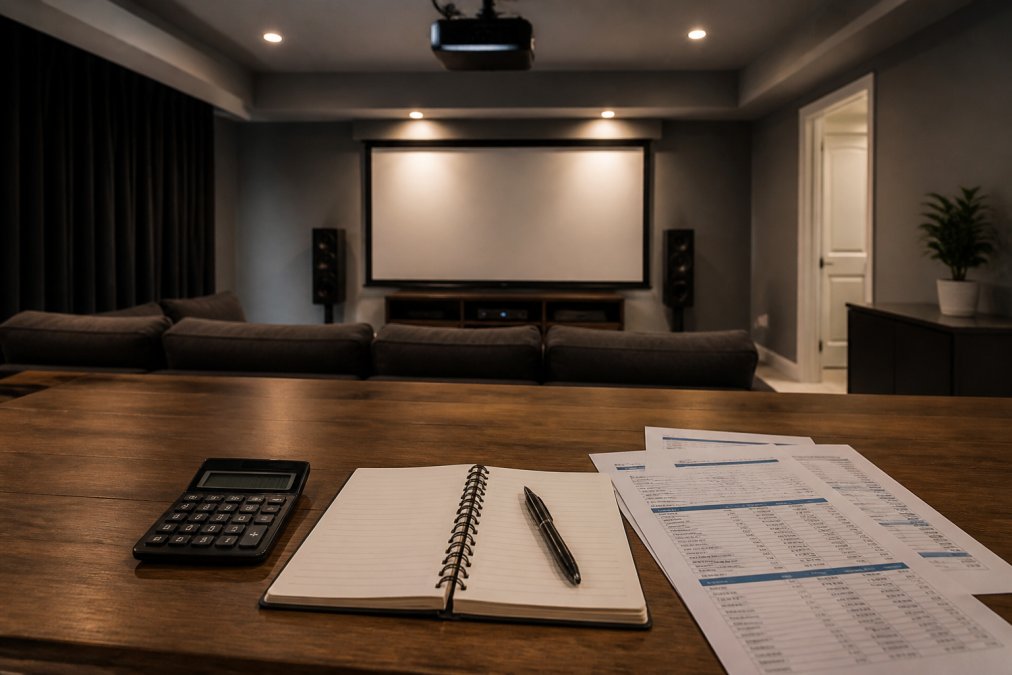
The single biggest variable is the room itself. A spare bedroom with standard drywall needs far less work than a basement requiring soundproofing, HVAC adjustments, and electrical runs. According to the CEDIA market research on residential technology, professional integrators report that labor and installation typically account for a substantial portion of total project cost, which is why the DIY route appeals to so many homeowners.
Home Theater Installation Price Breakdown by Component
Rather than guessing, break your home theater installation price breakdown into five categories: video, audio, seating, room treatment, and labor. This structure prevents the classic mistake of overspending on a projector and leaving nothing for the speakers that actually sell the experience.
Projector and Screen Costs
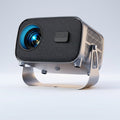
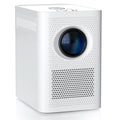
The projector is the heart of the system, but it is rarely the most expensive single component. A capable native 1080p projector with 4K support, such as the Nova 300 Smart Home Theater Projector available at JoeMo Promo for $529.99, delivers a crisp 300-inch image with automatic focus and keystone correction. Features like a 360-degree rotating stand let you project onto a wall or ceiling without permanent mounting hardware, which keeps installation costs near zero.
For the screen itself, expect to pay anywhere from $150 for a basic pull-down manual screen to over $2,000 for a fixed-frame ambient-light-rejecting screen that performs well in rooms you cannot fully darken. Projector bulbs and laser light sources have different lifespans, so factor replacement costs into your long-term thinking.
Audio System and AV Receiver Pricing
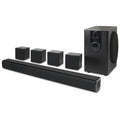
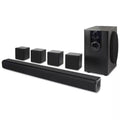
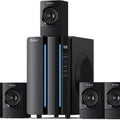
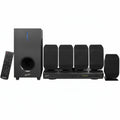
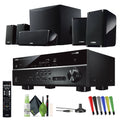
Audio is where most budgets quietly collapse. A home theater setup cost 2026 estimate that allocates less than a third of its total to sound will feel flat, regardless of the projector's quality. A complete 5.1 surround sound system with a built-in receiver, like the Yamaha YHT-4950U offered at JoeMo Promo for $618.80, delivers 400W of total output power and removes the need to buy a separate AV receiver. The iLive 5.1 Surround Sound System at $519.99 offers similar plug-and-play simplicity for buyers who want to skip the receiver configuration entirely.

If you are building a component-based system, a standalone AV receiver with Dolby Atmos support typically costs between $400 and $1,500. Add a pair of floor-standing speakers, a center channel, surround speakers, and a subwoofer, and the audio budget for a mid-range system lands between $1,200 and $3,500. Wiring and cabling, including HDMI 2.1 runs and speaker wire, adds another $100 to $400 depending on room dimensions.
Seating, Lighting, and Acoustic Treatment
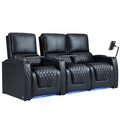
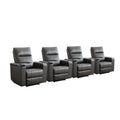
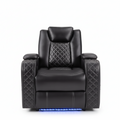
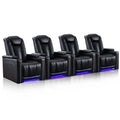
Comfortable seating transforms a media room into a destination. A set of five individual power recliners in vegan leather, each with its own cup holder, runs about $1,939.99 at JoeMo Promo. That price competes well with custom theater seating, which often exceeds $1,000 per seat once you add motorized recline and lighting features.
Lighting control matters more than most buyers expect. Dimmable recessed lights with smart home integration cost $200 to $800. Acoustic treatment, including bass traps, absorption panels, and diffusers, starts around $300 for a basic kit and climbs past $2,000 for a professionally designed room. Soundproofing, which prevents sound from leaking into the rest of the house, is a separate expense that typically adds $1,000 to $5,000 depending on whether you are adding mass-loaded vinyl, double drywall, or resilient channels.
| Component | Entry-Level | Mid-Range | Premium |
|---|---|---|---|
| Projector | $300-$600 | $600-$1,500 | $1,500-$5,000 |
| Screen | $150-$400 | $400-$1,000 | $1,000-$3,000 |
| Audio (5.1) | $500-$800 | $800-$2,000 | $2,000-$6,000 |
| Seating (per seat) | $150-$300 | $300-$600 | $600-$1,500 |
| Room treatment | $0-$300 | $300-$1,000 | $1,000-$5,000 |
DIY vs Professional Home Theater Setup: Real Cost Difference
The DIY vs professional home theater setup decision comes down to two factors: your tolerance for running cables and your comfort with calibration. A DIY installation of a projector-based setup with wireless speakers, like the Nova 300 paired with a Bluetooth surround system, can be completed in an afternoon with zero labor costs. Automatic focus and keystone correction eliminate the most frustrating part of projector setup, which is manually aligning the image.
Professional installation becomes worth the money when your project involves in-wall wiring, ceiling mounting, acoustic treatment, or whole-room lighting control. Integrators charge anywhere from $500 for a basic TV and soundbar install to $5,000 or more for a full dedicated theater room with component integration and calibration services. Regional labor rate variations are significant; installation quotes in major metropolitan areas often run 20% to 40% higher than the national average, so get multiple bids before committing.
Budget Tiers: Entry-Level, Mid-Range, and Premium Builds
Home theater setup cost 2026 planning becomes far easier when you pick a tier first. An entry-level build, suitable for a living room or apartment, pairs a $500 projector with a $500 to $700 surround sound system and a basic screen, landing around $1,500 to $2,000. This tier works best with a portable or tabletop projector that avoids permanent installation.
A mid-range build for a dedicated media room invests in a brighter projector, a fixed-frame screen, acoustic panels, and real theater seating. Expect to spend $4,000 to $8,000, with the seating and audio each claiming roughly a quarter of the total. This is the sweet spot for most families who want a genuine cinematic experience without bespoke installation costs.
Premium builds, which include Dolby Atmos speaker arrays, dual subwoofers, calibrated projectors, motorized seating, and full acoustic treatment, routinely exceed $15,000. The law of diminishing returns applies harshly here: the jump from entry-level to mid-range transforms the experience, while the jump from mid-range to premium is noticeable mainly to enthusiasts and those with a dedicated theater room and high disposable income.
Hidden Costs and Ongoing Expenses Most Buyers Miss
Every home theater setup cost 2026 guide mentions the projector and the speakers. Few mention the expenses that arrive after opening night. Cabling and mounting hardware, including ceiling mounts, HDMI runs, and cable management, add $100 to $500. HVAC and ventilation matter in a closed media room where a projector and AV receiver generate noticeable heat; ducting or an exhaust fan can cost $500 to $2,000 if the room lacks adequate airflow.
Power conditioning protects sensitive electronics from surges and dirty power, adding $150 to $600. Energy efficiency is another overlooked factor: a 4K projector, AV receiver, and subwoofer running for a three-hour movie can draw a meaningful amount of electricity, and the cost compounds if the system is left in standby mode. Energy Star guidance on home theater energy use recommends using advanced power strips to eliminate phantom loads from equipment in standby.
Resale value is the counterintuitive upside. A well-installed dedicated theater room with proper wiring, acoustic treatment, and built-in seating can add to a home's appeal, particularly for buyers who value entertainment spaces. Conversely, a poorly executed DIY installation with visible cables and mismatched equipment can detract from the room's value.
Best Home Theater Equipment for 2026 at Every Price Point
Choosing the best home theater equipment for 2026 means matching gear to your room size and usage pattern, not just your budget. For most buyers, the Nova 300 Smart Home Theater Projector is the smart starting point. Its native 1080p resolution with 4K support, automatic focus and keystone correction, and 360-degree stand deliver a sharp image on any wall with minimal setup effort, all for $529.99. The built-in WiFi and Bluetooth let you stream directly or connect wireless speakers, which keeps the space clutter-free.
For audio, the Yamaha YHT-4950U remains the benchmark for value. Its 400W of output across 5.1 channels, paired with Yamaha's reputation for reliability, makes it a set-and-forget choice for $618.80. The iLive 5.1 Surround Sound System offers a more budget-conscious alternative at $519.99 with equally simple plug-and-play connectivity. Both eliminate the need for a separate AV receiver, which simplifies the setup and reduces the total component count.
Seating completes the experience. The Ridgeline 5-Seat Power Theater Recliner Set, priced at $1,939.99, gives each viewer independent control over their recline position, with a cup holder for every seat. For smaller spaces, a single power recliner or a comfortable sectional is a reasonable compromise, though dedicated theater seating with individual seats generally provides better sightlines and comfort for marathon viewing sessions.
Build in Phases to Spread Out the Cost
A modular or phased build-out strategy is the most practical way to manage home theater setup cost 2026 without compromising quality. Start with the projector and a basic screen, which delivers the core visual experience immediately. Add a soundbar or entry-level surround system in phase two, then upgrade to a full 5.1 system with a subwoofer in phase three. Seating and acoustic treatment come last, once the core electronics are proven.
This approach works because the projector and audio system are the components most likely to become dated, while seating and room treatment retain their value. A phased plan also lets you take advantage of sales and newer models arriving throughout the year. If you are building a dedicated theater room, complete the electrical, wiring, and HVAC work in the first phase, since retrofitting those after drywall is installed multiplies the cost.
Conclusion: Plan Your Budget Before You Buy
Building a home theater is a sequence of decisions, and the order matters. Start with a realistic budget that accounts for the projector, audio, seating, and the hidden costs of wiring, power, and room treatment. Decide whether DIY or professional installation fits your skill level and your room's complexity. Then pick a tier that matches your expectations, and consider a phased build to spread the expense.
JoeMo Promo simplifies this process by offering handpicked projectors, surround sound systems, and theater seating that work together out of the box. The Nova 300 projector delivers up to a 300-inch image with automatic focus and keystone correction, while wireless speaker connectivity keeps the installation clean. With free shipping on most orders within the Continental U.S. and a 30-day return policy, you can build your cinema with confidence. Shop the Collection and turn your next movie night into an event.
Frequently Asked Questions
Is it cheaper to DIY or hire a professional for home theater setup?
DIY is almost always cheaper upfront. You save on labor fees, which can range from a few hundred to several thousand dollars depending on the job. However, professional installation reduces the risk of wiring errors and calibration mistakes. For a basic living room setup, DIY with a plug-and-play system is practical. For a dedicated theater room with in-wall wiring, acoustic panels, and a mounted projector, professional help is worth the extra cost to avoid expensive rework.
What is the average cost of a mid-range home theater system in 2026?
A mid-range home theater setup typically lands between $2,500 and $5,000. This budget covers a quality 4K projector like the Nova 300, a 5.1 surround sound system from a trusted brand like Yamaha or iLive, and basic seating. It excludes major room renovations. This tier prioritizes equipment performance over custom construction, making it the most common choice for homeowners upgrading a spare room or large living area.
Does room size significantly impact home theater setup costs?
Yes, room size drives several costs. A larger room needs a brighter projector and a more powerful sound system to fill the space, adding to equipment expenses. It also increases the amount of wiring, acoustic treatment, and seating required. A smaller room can get away with a 1080p projector and a compact 5.1 system, keeping the total cost lower. Measure your room dimensions first to avoid overbuying or underpowering your system.