Best Home Theater Seating Brands 2026: Top Picks Reviewed
Table of Contents
- What Separates the Best Home Theater Seating Brands in 2026
- Quick Comparison: Top Home Theater Seating Picks
- The Best Material for Home Theater Chairs
- Home Theater Seating Layout Ideas for Any Room
- How to Measure for Home Theater Seating
- Maintenance, Acoustics, and Long-Term Value
- Frequently Asked Questions
Last Updated: September 16, 2026
What Separates the Best Home Theater Seating Brands in 2026
Shopping for home theater seating comes down to three things you can't see in a product photo: what's inside the frame, how the recline mechanism holds up after thousands of cycles, and whether the upholstery still looks new after five years. This guide from JoeMo Promo covers the materials that last, and the layout math that keeps every seat a good seat.
Quick Comparison: Top Home Theater Seating Picks
The short version: the Ridgeline 5-Seat Power Theater Recliner Set is the best pick for most media rooms, the Haiylee Zero Gravity Theater Sofa wins for solo lounging, and the single Ridgeline recliner is the smartest way to test the water.

| Model | Price | Seats | Best For |
|---|---|---|---|
| Ridgeline 5-Seat Power Theater Recliner Set | $1,939.99 | 5 | Full family media rooms |
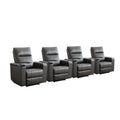
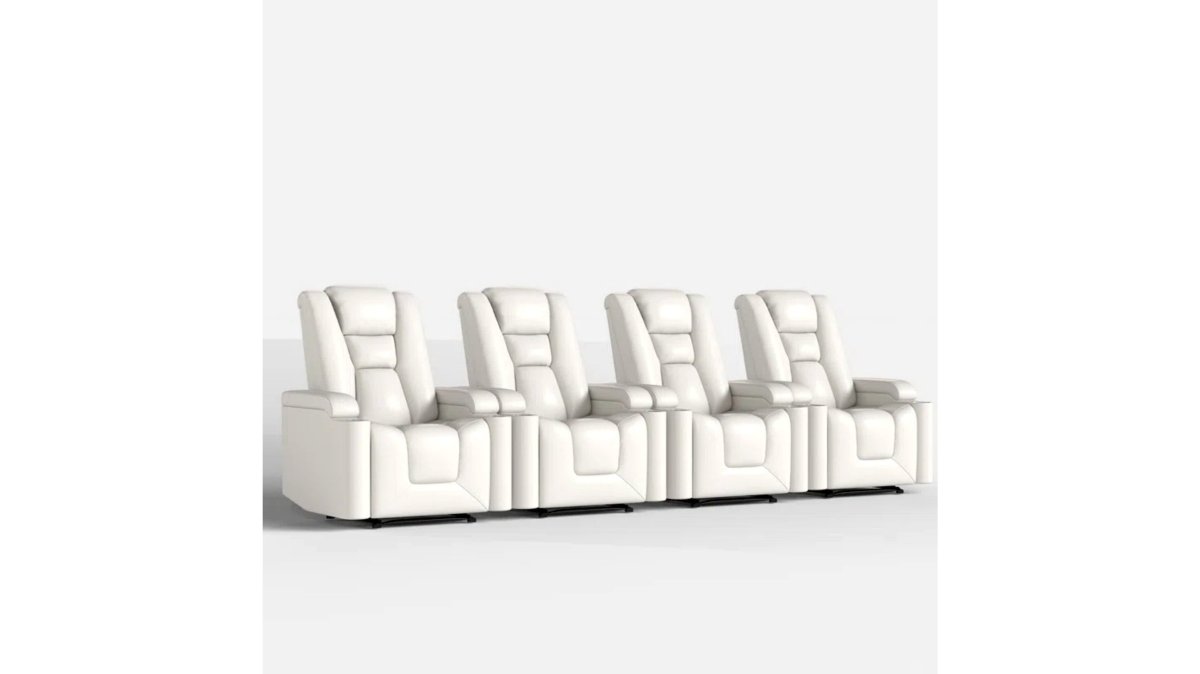
| Ridgeline 4-Seat Power Recliner Set | $1,369.99 | 4 | Basement theaters, four viewers |
| Ridgeline Single Power Theater Recliner | $1,519.99 | 1 | Single upgrades, row building |
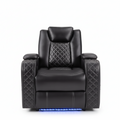
| Ridgeline Power Recliner with USB & Storage Arm | $1,739.99 | 1 | Charging, remotes, snacks |
| Haiylee Zero Gravity Theater Sofa | $2,474.54 | 1 | Primary bedroom, solo viewing |
Ridgeline 5-Seat Power Theater Recliner Set
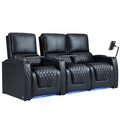
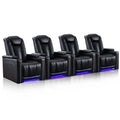
Five individual power recliners in vegan leather, priced at $1,939.99, and the set most families should start with. Every seat gets its own cup holder, so nobody reaches across the row mid-scene. The honest limitation: five seats need roughly 15 feet of wall, so measure before you commit. consumer furniture sizing guidance from the U.S. Consumer Product Safety Commission is worth a look if you're fitting seating near stairs or raised platforms.

Ridgeline 4-Seat Power Recliner Set
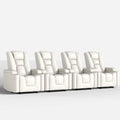
Four power recliners with cup holders, in gray, beige, black, or brown, at $1,369.99, the pick for a basement theater where four people watch most nights. Color matters more than buyers think: beige against dark walls reads as a design feature, while black disappears.
Ridgeline Single Power Theater Recliner
One seat built like a real theater chair: faux leather, power recline, built-in cup holder, $1,519.99. A common mistake is buying a full row before confirming anyone uses the room. Start with one seat, live with it a month, then build the row around it.
Ridgeline Power Recliner with USB & Storage Arm
USB charging, dual cup holders, and a storage arm for remotes and snacks, in white vegan leather at $1,739.99. The storage arm is underrated until you've lost a remote between cushions twice in one season, and it pairs cleanly with the rest of the Ridgeline line.
Haiylee Zero Gravity Theater Sofa
Top-grain leather over a solid-and-engineered wood frame, with power headrest and footrest, at $2,474.54. This is less theater seating and more the best seat in the house, built for a primary bedroom or a media room where one person watches seriously. The trade-off: it seats one, so it's a personal purchase, not a family one.
The Best Material for Home Theater Chairs
Top-grain leather is the best material for home theater chairs if longevity and easy cleaning matter most, while performance fabric is the better call for homes with pets or young kids. The decision breaks into four materials, each behaving differently against spills, claws, body heat, and sound.
Foam density and stitching: the specs that decide year three
Material is the cover; foam is the chair. Foam density decides how a seat feels in year three, not year one. Low-density foam collapses into a hammock shape under daily use, while higher-density cushions hold their shape through long viewing sessions. Budget rows typically use foam in the low 1-pound-per-cubic-foot range and premium rows use 1.8 pounds or higher, though brands rarely publish the number.
How upholstery changes the sound of the room
This is the part almost no buying guide covers. Upholstered seating absorbs reflected sound: a room filled with fabric-covered chairs sounds warmer and less echoey than the same room with hard leather or vinyl seats, because woven fibers trap mid- and high-frequency reflections that would otherwise bounce off seat backs and armrests. In a small, hard-surfaced media room, performance fabric or microfiber seating can noticeably tame a bright, slap-echo problem without adding a single acoustic panel.
Home Theater Seating Layout Ideas for Any Room
Row seating in a straight line is the default, but it isn't always right. A curved layout keeps every viewer roughly equidistant from the screen, which matters more as screen size grows. Loveseat configurations work in narrow rooms where a full row would block the doorway. For small spaces, a two-seat row against the back wall with a single recliner angled toward the screen beats four seats crammed into a line.
How to Measure for Home Theater Seating
Measure the wall first, the recline depth second, and the walking path third. A recliner needs clearance behind it for the backrest to lay flat, and most people forget that a fully reclined seat eats 12 to 18 inches of floor space behind the row. Seat width matters too: a 36-inch-wide recliner times five seats is 180 inches, or 15 feet, before armrest gaps.
Maintenance, Acoustics, and Long-Term Value
Motorized components are the part of theater seating that fails first, and almost nobody maintains them. A power recliner is a piece of furniture wrapped around an electromechanical device, and the device has a service life. Treat the maintenance schedule the way you would a garage door opener, and a good row can outlast the room it sits in.
A realistic maintenance schedule for power recliners
- Every one to three months: vacuum the mechanism housing and the gap under the seat with a brush attachment. Dust and pet hair work into the actuator and hinge points, and grit wears a motor out early.
- Every six months: inspect the wiring harness where it flexes at the recline hinge. That is the highest-stress point on the chair, and a chafed wire is the most common electrical failure.
- Annually: check every bolt and bracket on the frame and re-tighten anything loose. A chair that feels "wobbly" is usually three loose fasteners, not a broken frame.
- As needed: clean and lightly condition leather covers; vacuum fabric covers. Never saturate a cover near the motor housing.
The failure modes to know before you buy
The actuator, the linear motor that pushes the footrest and backrest, is the part that dies first. Two habits shorten its life dramatically: reclining with someone sitting on the footrest, and forcing the chair past its travel limit when something is jammed under the seat. Both strain the actuator and the gear train. A second common failure is the hand control or control board, usually a cheaper fix than the motor.
What the warranty actually covers
Warranty language on theater seating typically splits into three tiers with different clocks: the frame (often the longest coverage), the cushions and foam (mid-length), and the electrical components, motor, wiring, hand control (usually the shortest). Read which tier the motor falls under, because that is the part most likely to fail and the one most often excluded or limited.
Acoustics: the seating decision that changes how the room sounds
Upholstered seating absorbs reflected sound, so a room full of fabric-covered chairs sounds warmer than one with hard surfaces, one reason performance fabric has a small edge in echo-heavy rooms. Leather reflects more high-frequency energy and can read as brighter in a bare room. The practical takeaway: if your media room echoes when you clap, fabric seating is a free acoustic treatment; if the room is already damped with carpet and panels, material choice is about comfort and cleaning, not sound.
Ergonomics for the long haul
Ergonomic design matters for long sessions. Adjustable lumbar support and a headrest that tilts to your eyeline reduce neck strain during a double feature, and a seat that lets your feet rest flat when reclined keeps pressure off the lower back. The most common mistake is buying a row sized for the room rather than the viewer, a seat too deep forces slouching, and a headrest set for someone six inches taller pushes the neck forward.
Frequently Asked Questions
Who makes the best home theater seats in 2026?
JoeMo Promo's Ridgeline line covers most room sizes: the 5-seat power recliner set at $1,939.99 anchors a full media room, while the 4-seat set at $1,369.99 suits smaller spaces. For a single premium seat, the Haiylee Zero Gravity Theater Sofa at $2,474.54 adds top-grain leather and a power headrest.
What features should I look for in premium home theater seating?
Prioritize lumbar support, headrest adjustment, and a recline mechanism rated for daily use. Cup holders, USB charging ports, and armrest storage add everyday convenience. Check seat width, weight capacity, and backrest height against your room. Foam density matters most for long movie marathons, since low-density foam flattens within a year or two. Warranty coverage on motors and frames is the clearest signal of build quality.
How do I measure for home theater seating?
Measure the room's length and width first, then subtract walking space behind the last row. A typical recliner needs about 3 feet of clearance in front for the footrest to extend fully. Check seat width against your row length, and confirm doorway width before ordering a set. For a 12-foot-deep room, a single row of recliners works better than two rows with limited legroom.
Are power recliners better than manual for home theaters?
Power recliners win on precision. You can stop the recline at any angle, which matters for viewing angle and lumbar comfort over a three-hour film. Motorized headrests and footrest extensions are only available on power models. Manual recliners cost less and have fewer parts to maintain, but power models from brands like JoeMo Promo include USB charging and storage arms that manual chairs rarely offer.
What is the lifespan of home theater seating?
Well-built home theater seating lasts 7 to 10 years with normal use. Frame construction and foam density drive most of that lifespan. Motorized components typically outlast upholstery if kept free of dust and debris, so vacuum under and around the recline mechanism every few months. Top-grain leather and performance fabric resist cracking better than bonded leather, which tends to peel after a few years.
Building a home cinema is a project with a dozen moving parts, and seating is the one you'll notice every single night. JoeMo Promo handpicks theater seating for build quality and cinematic feel, pairs it with projectors that throw a 300-inch image using automatic focus and keystone correction, and ships most orders free within the Continental U.S. with a 30-day return policy behind it. Get started with JoeMo Promo and turn any room into a private theater.