Acoustic Panels vs Soundproof Curtains for Home Theater
Table of Contents
- Acoustic Panels vs Soundproof Curtains: What Each One Actually Does
- Soundproofing vs Acoustic Absorption: The Distinction That Decides Your Purchase
- How to Reduce Echo in a Home Theater Without Gutting the Room
- Acoustic Panel Placement Guide for Media Rooms
- NRC vs STC: The Two Ratings That Tell You What a Product Will Do
- Where Soundproof Curtains Win and Where They Fall Short
- Using Both Together: Layering Absorption and Blocking in One Room
- Conclusion: Match the Product to the Problem
- Frequently Asked Questions
Last Updated: October 3, 2026
Acoustic Panels vs Soundproof Curtains: What Each One Actually Does
Most people buy the wrong product for their noise problem.
This guide from JoeMo Promo breaks down what each option does, so you can match the product to the problem.
Sound absorption soaks up sound energy inside a room so it does not bounce off hard surfaces. Sound transmission is sound passing through a wall, floor, or window into another space.
Sound Absorption: Taming Echo Inside the Room
Absorption products reduce how much sound reflects off your walls. In a home theater, that reflection is what makes dialogue sound muddy and gunfire sound like a smeared mess. Panels made from porous materials, such as fiberglass insulation guidance from the U.S. Department of Energy, trap sound energy as it hits the surface and convert it to a tiny amount of heat.
Curtains with dense, multi-layered fabric also absorb some sound, but usually less per square foot than a dedicated panel.
Sound Transmission: Blocking Noise From Leaving or Entering
Blocking sound requires mass, not porosity. This is where soundproof curtains earn their name: thick, multi-layered fabric with proper coverage can reduce mid-range and higher frequencies passing through a window or thin wall.
Low bass frequencies are the hard part. They carry far more energy and pass through almost any fabric with ease.
Soundproofing vs Acoustic Absorption: The Distinction That Decides Your Purchase
Soundproofing stops sound traveling between spaces. Acoustic absorption improves how sound behaves inside one space.
If your complaint is "I can hear the movie from the bedroom," you need blocking. If it is "the movie sounds hollow and I can't understand the dialogue," you need absorption. The wrong product leaves the problem untouched.
How to Reduce Echo in a Home Theater Without Gutting the Room
Reducing echo does not require construction. Treat the worst reflection points with panels and soft furnishings, and dialogue clarity improves the same day.
Where Echo Actually Comes From: First Reflection Points
First reflection points are where sound bounces once before reaching your ears, the highest-value places to treat.
Treat those spots first:
- Side walls at ear height, left and right of the main seat
- The ceiling between you and the front speakers
- The wall directly behind the front speakers
Bass builds up in corners, so corner treatment helps too, though it usually needs thicker material than a wall panel.
Acoustic Panel Placement Guide for Media Rooms
Place panels at the first reflection points before anywhere else. That single rule beats any amount of random wall coverage.
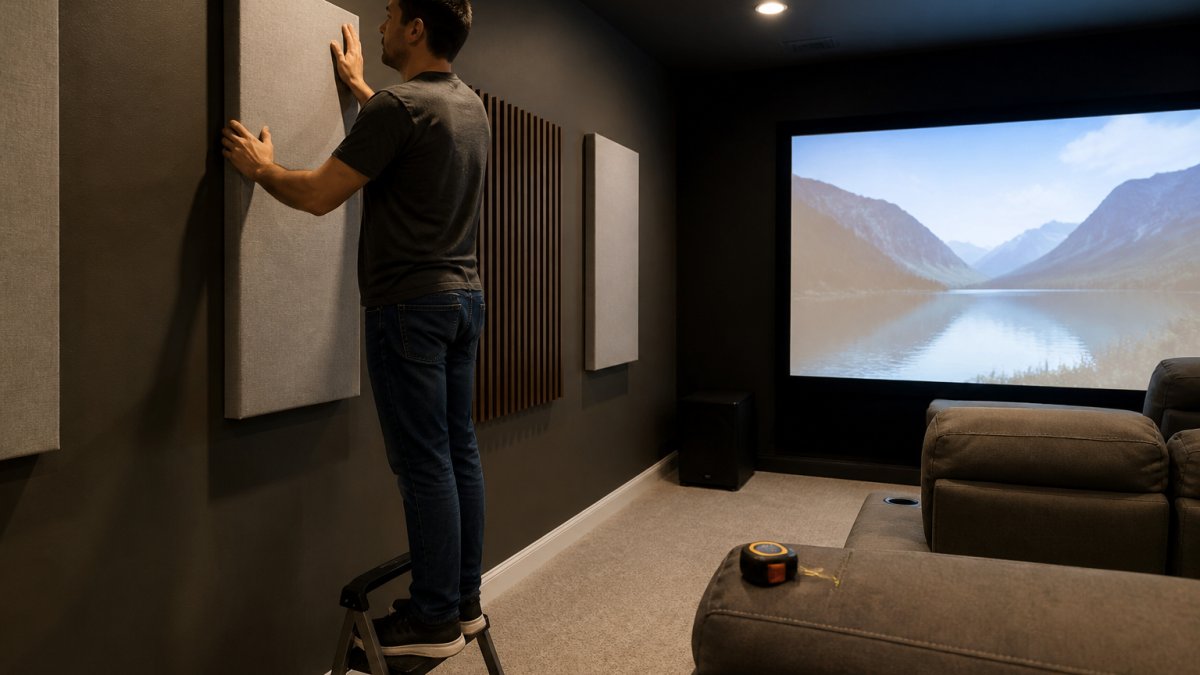
A practical order of operations:
- Cover the left and right first reflection points at seated ear height
- Add a panel or two on the ceiling between the seat and the screen
- Treat the rear wall if the room still sounds lively
You do not need to cover every wall. Treating the first reflection zone and the rear wall handles most echo problems in a typical media room.
NRC vs STC: The Two Ratings That Tell You What a Product Will Do
NRC and STC measure completely different things, and mixing them up is the fastest way to buy the wrong product. Knowing what the numbers look like in the real world lets you read a spec sheet and predict performance.
- NRC (Noise Reduction Coefficient) rates how well a material absorbs sound inside a room, on a scale from 0 to 1. A value of 0 means the surface reflects essentially everything (think bare drywall or glass). A value of 1 means it absorbs essentially everything that hits it. Higher NRC means less echo.
- STC (Sound Transmission Class) rates how well a barrier blocks sound from passing through it, on an open-ended scale where higher is better. STC is measured in a lab across a full assembly, wall, window, or door, not a single sheet of material.
That second point trips people up constantly. A curtain does not have an STC on its own, the STC belongs to the whole window assembly: glass, frame, gap, and curtain together.
| Rating | Scale | What It Measures | Fixes | Typical Product |
|---|---|---|---|---|
| NRC | 0 to 1 | Sound absorbed inside the room | Echo, reverberation | Acoustic panels, foam |
| STC | Open-ended, higher is better | Sound blocked through an assembly | Noise leakage to other rooms | Soundproof curtains, mass-loaded barriers, laminated glass |
How to Read the Numbers in Practice
Rules of thumb:
- For absorption, an NRC of 0.70 or higher is considered good; 0.90 or higher is excellent. Thin foam often lands in the 0.30 to 0.50 range, which is why cheap foam tiles underdeliver.
- For blocking, every 10-point STC increase roughly halves the perceived loudness of transmitted sound. Going from STC 25 to STC 35 is a meaningful, audible improvement. Going from STC 25 to STC 28 is not.
- A product can have a strong NRC and a weak STC, or the reverse. Panels tend to score well on NRC. Curtains and heavy barriers are rated on STC.
Check the number that matches your problem. A high-NRC panel will not stop noise reaching the bedroom, and a high-STC curtain will not fix a hollow-sounding room. If a listing quotes only one rating, assume the other is weak.
Room-Specific Diagnosis: Which Rating You Actually Need
Ratings only matter in context. The same room can need different treatment depending on its size and surfaces.
- Hard, bare rooms (hardwood or tile floor, drywall walls, large windows, minimal furniture) generate strong reflections and long reverb times. These rooms almost always need absorption first, high-NRC panels at the first reflection points.
- Soft, furnished rooms (wall-to-wall carpet, heavy sofas, bookshelves, drapes) already absorb a lot. Adding more panels here yields diminishing returns, and the real problem is often leakage through a shared wall or window, an STC problem.
- Small rooms build up bass quickly and sound boomy. Panels help, but thin panels do little below a few hundred hertz, so thicker material or corner treatment is required.
A quick diagnostic: clap once in the middle of the room. A sharp slap-back or ringing tail means absorption is your priority.
Most guides skip this step, handing you two ratings and no way to decide. Diagnose the room first, then buy the rating that matches.
Where Soundproof Curtains Win and Where They Fall Short
Curtains win over a window or glass door, or when you want a soft, temporary treatment with no drilling. They are also the only realistic option for renters who cannot mount hardware.
They fall short in four predictable ways, and each mechanism tells you whether a curtain can solve your problem at all.
- Low bass passes straight through. Bass frequencies carry far more energy than mids and highs. Fabric mass simply is not enough to stop them. A curtain that meaningfully reduces a neighbor's TV dialogue will do almost nothing about a subwoofer thump. This is physics, not a product flaw.
- Performance collapses with gaps. Sound behaves like water, it escapes through the smallest opening first. A curtain hung flat against a wall, or with a two-inch gap at the top and sides, leaks most of the sound it was supposed to block. Sealing the perimeter matters more than the fabric thickness.
- Absorption per square foot is low. A dedicated panel absorbs far more per square foot than a curtain. So curtains give you limited echo control even when hung well, because they cover a small fraction of the room's reflective surface.
When a Curtain Is the Right Call
A heavy, multi-layered curtain over a window or glass door is a reasonable compromise when:
- You rent and cannot mount panels
- The problem is a single glass surface, not a shared wall
- You want a temporary or reversible treatment
It is not a substitute for proper absorption at the reflection points, and it is not a substitute for structural blocking when the wall itself is the leak.
The Hybrid Approach: Layering Both Solutions
Most guides frame panels and curtains as an either/or choice. That framing is wrong, the best-sounding media rooms use both, because they solve two different problems at once.
- Panels handle the echo inside the room, first reflection points, rear wall, and corners.
- Curtains handle transmission through windows and glass doors, the surfaces you cannot easily cover with rigid panels.
- Soft furnishings, a rug, upholstered seating, and bookshelves, soak up the remaining reflections and reduce the total panel count you need.
A practical layering order:
- Diagnose the room with a clap test to determine whether absorption or blocking is the primary problem.
- Treat the first reflection points with panels if echo is the issue.
- Add heavy curtains over windows and glass doors if leakage is the issue.
- Add a rug and soft furnishings to reduce remaining reflections.
- Add corner bass traps last, since bass is the hardest problem to solve.
Most competitors skip this layered approach, presenting the two products as competitors when they are actually complements.
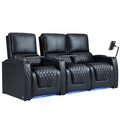
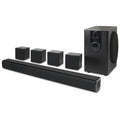
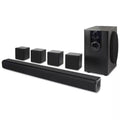
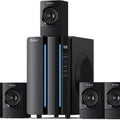
If you are building the room around a projector and surround setup, JoeMo Promo carries projectors, wireless surround systems, and theater seating that pair well with a treated room.
Using Both Together: Layering Absorption and Blocking in One Room
Panels handle echo inside the room; curtains handle noise leaking through windows and doors. Layering them gives clearer dialogue and fewer complaints from the rest of the house.
A simple combined approach:
- Panels at the first reflection points and rear wall for absorption
- Heavy curtains over windows and glass doors for transmission control
- Soft furnishings, such as a rug and upholstered seating, to soak up remaining reflections
If you are building the room around a projector and surround setup, JoeMo Promo carries projectors, wireless surround systems, and theater seating that pair well with a treated room. Our wireless speaker connectivity keeps cable clutter off the walls, which leaves clean surfaces for panel placement.
Conclusion: Match the Product to the Problem
The acoustic panels vs soundproof curtains choice is not a contest but a matching exercise. Panels fix echo inside the room; curtains reduce noise passing through windows and walls.
At JoeMo Promo, we help you build the room around that treatment, with projectors that throw a 300-inch image, wireless surround sound for a clutter-free setup, and comfortable seating for long movie nights.
Get started with JoeMo Promo and turn any room into a private theater.
Frequently Asked Questions
Are acoustic panels better than curtains for reducing echo?
For echo specifically, acoustic panels win. Echo is reflected sound bouncing off hard surfaces, and panels made from rockwool or fiberglass insulation absorb those reflections at their source. A 2-inch panel with an NRC rating around 0.80 absorbs roughly 80% of the sound energy that hits it. Heavy soundproof curtains help, but they mostly deaden the wall they hang on, leaving the ceiling and floor reflections untouched. If your room sounds hollow or dialogue is hard to follow, panels are the more direct fix.
Do soundproof curtains actually block outside noise?
They reduce some airborne noise, but the effect is smaller than most buyers expect. A dense, multi-layered curtain with a mass-loaded vinyl core can knock a few decibels off traffic or a barking dog, especially when hung with a sealed overlap at the edges. What curtains cannot do is stop structural sound traveling through shared walls or floor joists. If your problem is bass from a neighbor or footsteps overhead, curtains will not solve it.
How many acoustic panels do I need for a home theater?
Start with the first reflection points rather than covering every wall. A common approach is two panels per side wall at ear height, two behind the seating position, and one or two on the ceiling between the screen and the front row. That is typically six to eight panels for a medium media room. Add a bass trap in each front corner if low frequencies sound muddy. More panels than that can make the room sound dead and lifeless.
Can I use both acoustic panels and soundproof curtains in a home theater?
Yes, and for many rooms that is the right answer. Panels handle absorption: they cut reverberation, sharpen dialogue, and tighten mid-range frequencies. Curtains handle blocking: they add mass at windows and doorways where sound leaks out. A room with panels on the side walls and a heavy curtain over the window gets cleaner in-room audio and less noise escaping to the rest of the house. Treat them as two tools, not competing products.