Projector vs TV for Living Room Cinema
Table of Contents
- Projector vs TV: Head-to-Head Comparison
- Projector vs TV Picture Quality: What Actually Matters
- Projector or TV for Bright Room: Performance in Ambient Light
- Screen Size, Brightness, and Viewing Distance
- Projector Setup for Living Room: Installation and Space Needs
- TV vs Projector Cost: Total Investment and Long-Term Value
- Movie Watching, Streaming, and Everyday Use
- Which One Should You Choose?
- Frequently Asked Questions
Last Updated: October 10, 2026
Projector vs TV: Head-to-Head Comparison
A projector vs TV choice isn't about which is objectively "better", it's about which matches your room, your habits, and what you're willing to invest in setup and maintenance.
A TV is a self-contained display requiring only an outlet. A projector throws light onto a surface to create a larger image, but requires throw distance, darkness, and calibration. A TV works in any lighting condition with zero setup.
Quick Comparison Table
| Factor | Projector | TV | Winner for Most |
|---|---|---|---|
| Screen Size | 100-300 inches | 43-85 inches | Projector |
| Picture in Bright Rooms | Struggles | Excellent | TV |
| Installation | Complex (mounting/calibration) | Plug and play | TV |
| Starting Price | $500+ | $400+ | Comparable |
| Movie Theater Feel | Exceptional | Good | Projector |
| Everyday Streaming | Less ideal | Excellent | TV |
| Maintenance | Lamp/filter replacement | Minimal | TV |
| Space Flexibility | Requires throw distance | Works anywhere | TV |
Projector vs TV Picture Quality: What Actually Matters
Both technologies deliver stunning images but achieve it differently. What looks best depends on measurable performance metrics and room lighting.
Brightness: Lumens vs. Nits
Projectors use lumens (total light output); TVs use nits (brightness per square inch). They're not directly comparable. What matters is whether the image remains visible in your actual lighting conditions.
Standard projectors (2,000-3,000 lumens) fade with ambient light. Moderately lit rooms need 4,000-5,000 lumens. Ultra-bright models like the CAIWEI Halo 300 (10,000 lumens) handle daylight but cost more and generate heat and noise.

TVs emit their own light (500-1,500+ nits depending on model) and perform identically in darkness or daylight. For families watching throughout the day, this consistency is a practical advantage.
Contrast Ratio and Black Levels
Projectors achieve higher native contrast (often 10,000:1+) because they output no light for black, creating true darkness. This makes movies look cinematic with deep blacks and presence.
TVs struggle to produce true black because panels always emit some light. Premium TVs with local dimming or OLED improve this but don't match a projector's contrast in dark rooms.
HDR Performance and Color Gamut
Both support HDR, but implementation differs.
TVs handle HDR more effectively, reaching 1,000+ nits and maintaining brightness across the image. Premium TVs with quantum-dot or Mini-LED backlighting excel at HDR.
Projectors struggle with HDR due to lower peak brightness (3,000-4,000 lumens). HDR content is tone-mapped down, reducing the benefit.
Resolution and Sharpness
Both offer 4K resolution. At typical viewing distances, 4K is visible on a TV but less critical on a projector. A 100-inch 1080p projector can look as sharp as a 65-inch 4K TV from the recommended distance.
Real-World Living-Room Impact
In darkness: projectors create cinematic presence. In bright rooms: TVs deliver better image quality with higher brightness and HDR. For mixed viewing: TVs are more practical, no room adjustments needed. Choose based on your room's lighting and actual use.
Projector or TV for Bright Room: Performance in Ambient Light
Standard projectors (2,000-4,000 lumens) fade with ambient light, appearing washed out. You'd need to close curtains and dim lights.
TVs handle brightness effortlessly (500-1,500 nits), ensuring the image pops in any lighting. This is why TVs dominate living rooms.
Ultra-bright projectors like the CAIWEI Halo 300 (10,000 lumens) function in moderately lit rooms but cost more. A TV remains the better choice for non-light-controlled living rooms.
Screen Size, Brightness, and Viewing Distance
A 300-inch projection creates immersive scale no TV matches. But it requires throw distance, the Nova 300 needs 8-12 feet to project 300 inches. In a 12-foot room, you sit very close to a massive image, which feels uncomfortable. Smaller projections (100-150 inches) work in tight spaces but diminish the size advantage.

Optimal viewing distance is 1.5-2.5 times screen width. A 100-inch projector needs 12-20 feet; a 65-inch TV needs 5-10 feet. In compact rooms, a TV's smaller footprint is an advantage.
Projector Setup for Living Room: Installation and Space Needs
A TV requires an outlet and wall or stand, done in 10 minutes. A projector requires decisions on mounting, throw distance, cables, and screens. Ceiling mounting requires drilling and cable management. Auto-focus and keystone correction help but aren't fully automatic.
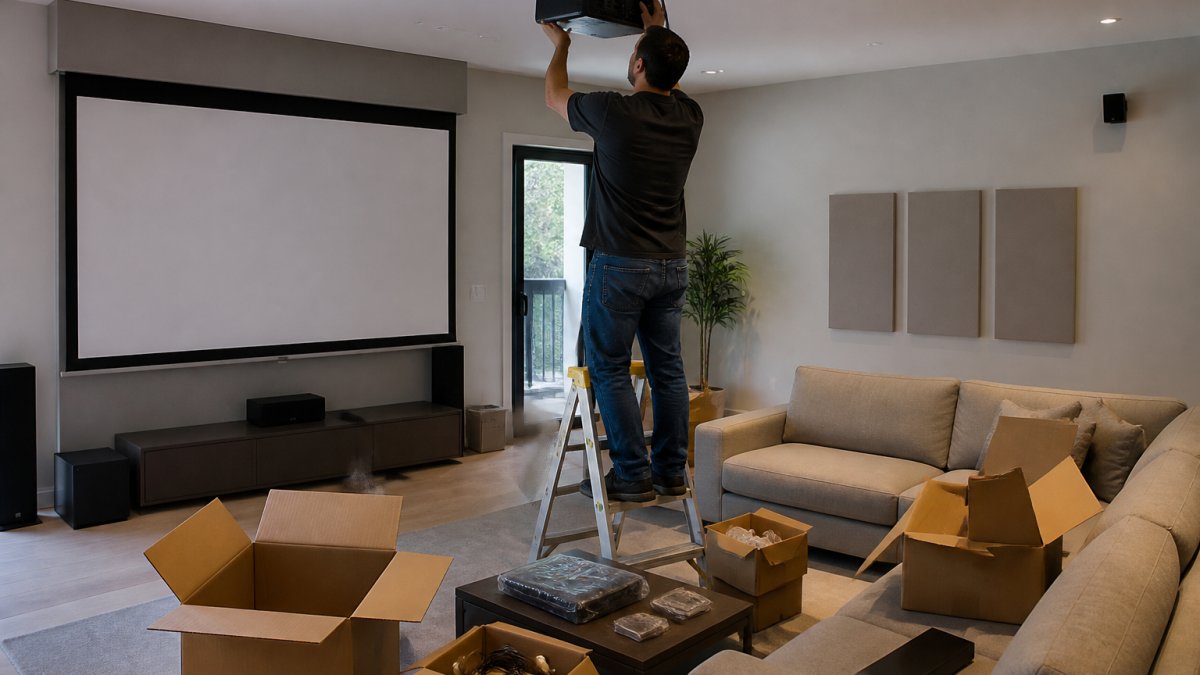
Screen installation, cable runs, and acoustic treatments make projector setup a weekend project or contractor job. For furnished living rooms, a projector installation feels invasive. A TV fits existing décor without modification.
TV vs Projector Cost: Total Investment and Long-Term Value
Purchase Price
Entry-level projectors cost $500-$600; decent 65-75 inch TVs cost $400-$800. Purchase prices are comparable, but this is where the projector's cost advantage ends.
Projector Ongoing Costs
Projectors require regular maintenance, which can include lamp replacement, filter replacement, and occasional recalibration. You may also consider an optional screen and professional installation.
TV Ongoing Costs
TVs have minimal ongoing costs:
- Maintenance: None. No lamps, no filters, no calibration.
- Electricity: A 65-inch TV uses roughly 100-150 watts. At 6 hours daily (higher than projector use), that's roughly $30-$45 per year.
- Lifespan: Modern TVs last 7-10 years before degradation (dimming, color shift) becomes noticeable. Some last longer.
- Replacement cost: When a TV fails, you buy a new one. A replacement 65-inch TV costs $400-$800.
10-Year Total Cost Comparison
Let's model two realistic scenarios:
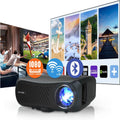
Nova 300 Smart Home Theater Projector →
Scenario 1: Moderate Use (3 hours per day)
Projector (lamp-based, $550 initial):
- Purchase: $550
- Lamp replacements (3 over 10 years): $600
- Filters: $750
- Screen: $400
- Installation: $400
- Electricity: $500
- Total: $3,200
TV (65-inch, $600 initial):
- Purchase: $600
- Replacement at year 8: $600
- Electricity: $270
- Total: $1,470
Scenario 2: Heavy Use (6 hours per day, movie enthusiast)
Projector (laser, $1,200 initial):
- Purchase: $1,200
- Filters: $750
- Screen: $500
- Installation: $500
- Electricity: $1,000
- Total: $3,950
TV (75-inch premium, $1,000 initial):
- Purchase: $1,000
- Replacement at year 7: $1,000
- Electricity: $400
- Total: $2,400
Key Takeaways
-
TVs cost 40-60% less over 10 years in total ownership, even accounting for replacement. The projector's ongoing maintenance and consumables add up quickly.
-
Projectors become cheaper only if you use them heavily and amortize the setup cost over many years. A projector used 2 hours per day for 10 years is more expensive than a TV. A projector used 6+ hours per day approaches cost parity.
-
Laser projectors improve the math by eliminating lamp replacements, but their higher purchase price ($1,200-$2,000+) means you need heavy use to justify the investment.
-
Unexpected costs add up: A failed projector lamp mid-movie, a screen that needs replacement, professional installation you didn't budget for, these are common surprises. TVs have fewer failure modes.
-
Upgrade cycles matter: TV technology improves rapidly (brighter panels, better HDR, new features). Replacing a TV every 7-8 years keeps you current. Projectors depreciate more slowly but also improve more slowly, so an older projector remains functional longer but may feel outdated.
The Value Proposition
For casual viewers and families who watch a mix of content, a TV's simplicity and potentially lower total cost can be appealing.
For dedicated movie enthusiasts willing to invest in a dark, dedicated media room and use the projector regularly (5+ hours per week), a projector's cinematic experience justifies the higher cost. But this requires intentional use and a controlled environment.
For most living rooms that serve multiple purposes, news, streaming, gaming, casual movies, a TV can be a financially practical choice.
Movie Watching, Streaming, and Everyday Use
This section separates the use cases clearly.
Projectors excel for:
- Movie marathons and film festivals
- Scheduled viewing events (game day, movie night)
- Dark, controlled environments
- Large-group viewing
TVs excel for:
- Background viewing (news, cooking shows, casual streaming)
- Daytime watching
- Spontaneous viewing without setup
- Multi-room flexibility (move it to different spaces)
- Gaming and fast-motion content
A projector demands intentionality. You plan to use it, you dim the lights, you sit down for a dedicated experience. Interrupting a movie to check the news means the projector is still running, the room is still dark, and you're stuck in "movie mode."
A TV is always ready. Morning coffee with the news, afternoon gaming, evening movie, same device, no setup changes.
Streaming platforms like Netflix and YouTube work on both, but the experience differs. A projector makes a 2-hour film feel like a theatrical event. TVs are built for the mixed diet of modern viewing.
Which One Should You Choose?
Choose a projector if: You have a dedicated media room or can control room lighting. You prioritize the cinematic experience over convenience. You watch movies regularly and value that immersive scale. You're willing to invest time in setup and maintenance. You can afford the total cost of ownership.
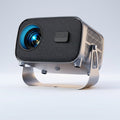
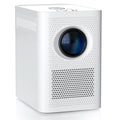
The Nova 300 Smart Home Theater Projector ($529.99) is an excellent entry point, the auto-focus and keystone correction remove much of the manual setup burden, and the 360° stand gives you flexibility in placement. For brighter rooms, the CAIWEI Halo 300 Ultra-Bright Projector ($559.99) at 10,000 lumens performs better in ambient light.
Choose a TV if: Your living room gets natural light or you watch during the day. You want simplicity and minimal maintenance. You watch a mix of content (news, sports, casual streaming, movies). You have a smaller or oddly-shaped room. You value reliability and lower total cost of ownership. You want something that works immediately, no setup required.
A TV is the practical choice for most living rooms. It's flexible, forgiving, and requires no compromises on your existing space.
A projector creates a unique cinematic experience in the right conditions, while a TV offers convenience for everyday viewing. For a living room that serves multiple purposes throughout the day, a TV can be a versatile choice. Projectors are ideal for dedicated home theaters where darkness is guaranteed and movie watching is the primary activity.
The choice between a projector and TV ultimately depends on how you actually use your living room. At JoeMo Promo, we understand that many homeowners find a TV convenient for everyday viewing, while a projector can transform special occasions into unforgettable experiences. If you're ready to create that cinematic experience, explore our handpicked selection of projectors with automatic focus and keystone correction, features that eliminate the setup headaches and let you enjoy your movie night immediately. Shop the Collection and discover how easy it is to turn any room into a private theater.
Frequently Asked Questions
Can you use a projector instead of a TV in a living room?
Yes, a projector can absolutely replace a TV for your living room, especially if you prioritize cinematic viewing. Projectors excel at creating large, immersive images, up to 300 inches, ideal for movie nights and sports. However, they work best in rooms you can darken. If your living room gets bright sunlight or you want something that works immediately without setup, a TV may be more practical. The Nova 300 Smart Home Theater Projector and CAIWEI Halo 300 Ultra-Bright Projector are both designed for home theater use with native 1080p resolution and 4K support.
Is a projector better than a TV for watching movies?
For dedicated movie watching, a projector typically delivers a more cinematic experience. The large screen size and immersive quality replicate a theater environment. However, 'better' depends on your room. If you have a dark, dedicated media room and can control lighting, a projector wins. If your space has windows, ambient light, or you want something that works in any lighting condition, a TV provides more consistent picture quality. Projectors like the CAIWEI Halo 300 with 10,000 lumens handle some ambient light better than budget options.
How much does a projector cost compared to a TV?
A quality projector for home cinema starts around $509-$559, like the Wanderlight Portable Smart Projector ($509.99) or Nova 300 Smart Home Theater Projector ($529.99). A large-screen TV (75-85 inches) typically costs more than our projectors. Projectors are often cheaper upfront, but factor in screen installation, ceiling mounting, and potential lamp replacement over time. For total cost of ownership, the gap narrows. Projectors also work best in a dark room.
Will a projector work in a bright living room?
Standard projectors struggle in bright rooms because ambient light washes out the image. The CAIWEI Halo 300 Ultra-Bright Projector addresses this with 10,000 lumens, making it one of the few options that holds up with some daytime light. For best results, close curtains or blinds. TVs are naturally brighter and perform far better in lit rooms without any setup changes. If your living room gets consistent sunlight, a TV is the more practical choice.
How much space do I need to set up a projector in a living room?
A projector needs throw distance, the space between the projector and the wall. A typical projector requires 6-10 feet to create a 100-inch image. For a 300-inch image, you'd need significant depth. If your living room is only 12 feet deep, you may be too close for a large, sharp image. The Nova 300 and CAIWEI Halo 300 both include auto-focus and keystone correction to adjust for less-than-ideal placement, but adequate throw distance is still important for image quality.