Best Projector for Bright Living Rooms: 3 Top Picks for 2026
Table of Contents
- Quick Comparison: Top Projectors for Bright Living Rooms
- How Many Lumens for Daylight Projection in a Living Room?
- Why an Ambient Light Rejecting Screen Changes Everything
- CAIWEI Halo 300 Ultra-Bright Projector: Best for Daylight Viewing
- Nova 300 Smart Home Theater Projector: Best for Flexible Setup
- Karnstar Outdoor Cinema Projector: Best for Backyard and Open-Plan Spaces
- How to Set Up a Projector in a Bright Living Room
- Conclusion
- Frequently Asked Questions
Last Updated: September 16, 2026
Quick Comparison: Top Projectors for Bright Living Rooms
Finding the best projector for bright living rooms comes down to one hard truth: a projector that looks stunning at midnight can wash out completely at noon. At JoeMo Promo, we make creating your dream home cinema simple and exciting. Brightness ratings that sound impressive on paper often collapse once sunlight hits the wall. The three picks below all clear that bar, and each suits a different room.
| Projector | Price | Light Output | Best For | Standout Feature |
|---|---|---|---|---|
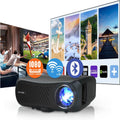
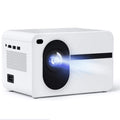
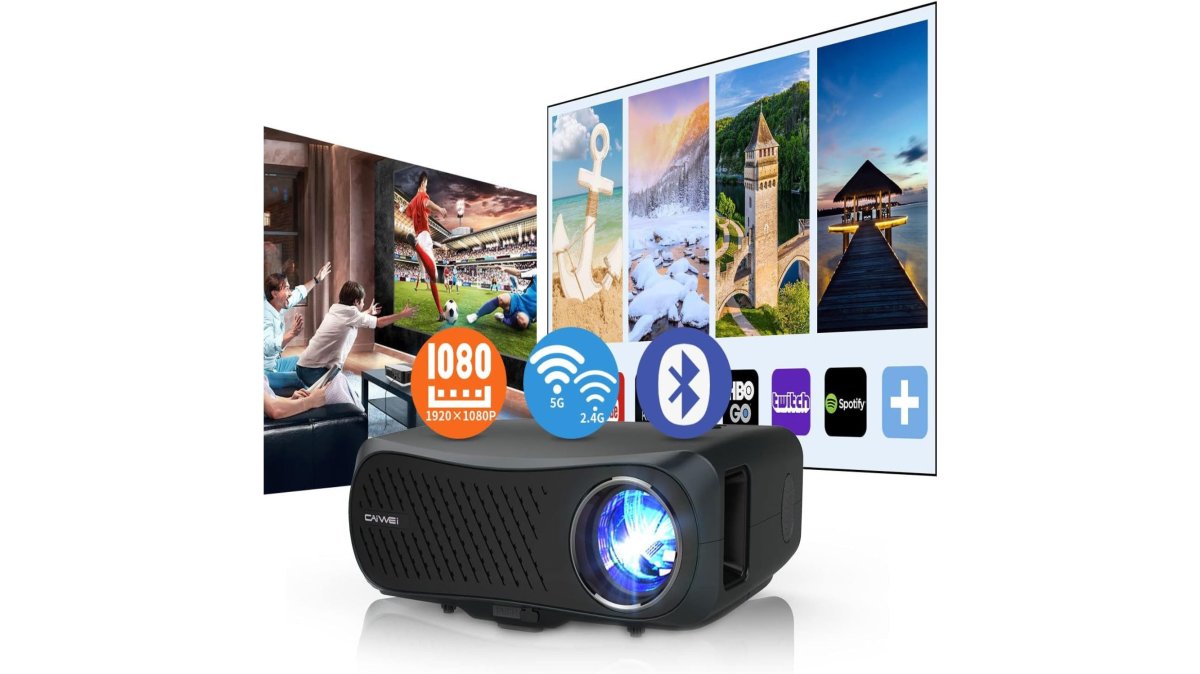
| CAIWEI Halo 300 | $559.99 | 10,000 lumens | Daylight viewing | Built-in Android, 5G WiFi |
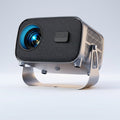
| Nova 300 | $529.99 | Native 1080p, 4K support | Flexible setup | 360° stand, auto-focus |
| Karnstar Outdoor | $499.99 | 18,000 lumens | Backyard and open-plan | Included 200" screen |
Below, we'll show you exactly how to match brightness, screen material, and throw distance to your actual room, not a showroom.

How Many Lumens for Daylight Projection in a Living Room?
The practical minimum for a living room with windows is roughly 3,000 ANSI lumens, and comfortable daylight viewing usually starts around 5,000. Anything marketed below 2,000 lumens belongs in a dark room. But that single number hides the three variables that actually decide whether your image survives a sunny afternoon: the standard the brightness is measured against, the screen it lands on, and the distance the projector sits from that screen.
ANSI lumens vs. peak lumens vs. color lumens. ANSI lumens (now often reported as ISO lumens under the newer standard) are measured across a nine-point grid on the full screen, which is why they are the only figure worth comparing. Peak or "maximum" lumens are measured on a single white-hot center point and routinely run 30-50% higher than the ANSI figure for the same projector. Color lumens measure brightness with color wheels or filters engaged, and on many budget units the color lumen number is dramatically lower than the white lumen number, meaning the bright spec you saw was measured on a white field the movie never actually uses. When a listing shows one big number with no standard attached, assume the real ANSI figure is meaningfully lower.
Screen gain multiplies or divides your brightness. A projector's rated output assumes a reference surface with a gain of 1.0. Put that light on a gray ALR screen with a gain of 0.8 and you lose roughly 20% of the perceived brightness in exchange for much deeper blacks. Put it on a high-gain 1.5 screen and you gain brightness at the cost of viewing angle. This is why a 3,000-lumen projector on a well-matched ALR screen can look brighter and punchier than a 5,000-lumen projector on a plain white wall.
Throw distance changes the math too. A long-throw projector mounted at the back of a 15-foot room has to push light across a longer path, and any ambient light in that path scatters into the image. Short-throw and ultra-short-throw units sit close to the wall, shorten the light path, and reduce the amount of room light that reaches the screen surface, a real brightness advantage in tight, bright rooms.
A working rule of thumb. For a room with heavy daytime use, aim higher than you think you need. Extra light output gives you headroom to run the lamp or laser at a lower, quieter setting later, and it lets you absorb the gain loss of a gray ALR screen without the image going dim. If you are choosing between a brighter projector on a white wall and a moderate projector on a proper ALR screen, the screen usually wins.
Why an Ambient Light Rejecting Screen Changes Everything
An ambient light rejecting screen is a projection surface engineered to reflect light coming from the projector's angle while absorbing light arriving from other directions, such as windows and ceiling fixtures. It is the single highest-impact upgrade for a bright room, often more noticeable than a brighter projector. Pair a modest projector with a good ALR screen and you will usually beat a brighter projector on a plain white wall.
How the rejection actually works. Most ALR screens use one of two mechanisms. Angular-reflective screens use a micro-structured surface, often a sawtooth or lenticular pattern, that bounces light arriving from below or behind back toward the audience while letting off-axis light from windows pass through or get absorbed. Filter-based screens use a dark gray or black substrate with a tuned coating that absorbs a large share of ambient light and reflects only the projector's directed beam. Both approaches trade some on-axis brightness for a large gain in perceived contrast, which is why the screen and the projector have to be chosen together rather than separately.
Gain is the number to watch. A higher gain reflects more light back toward the audience, which helps in bright rooms, but it narrows the viewing angle. Wide seating arrangements need a lower-gain screen so people at the edges still see a consistent image. A common pattern is to match gain to seating: a single-row couch directly in front of the screen can use a higher-gain ALR surface, while an L-shaped sectional or a room with seats off to the sides needs a lower-gain screen to avoid a hot center and dim edges.
Material matters as much as gain. Gray ALR screens with a gain around 0.8 are the workhorse for bright living rooms because they deepen black levels without crushing highlights.
CAIWEI Halo 300 Ultra-Bright Projector →
ANSI/ISO lumen measurement standards explained
CAIWEI Halo 300 Ultra-Bright Projector: Best for Daylight Viewing
Nova 300 Smart Home Theater Projector: Best for Flexible Setup
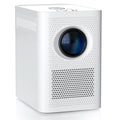
The Nova 300 solves the setup problem. Native 1080p with 4K support delivers crisp detail, and auto-focus plus keystone correction lock in a sharp picture in seconds, no manual fiddling every time you move it.

Karnstar Outdoor Cinema Projector: Best for Backyard and Open-Plan Spaces
The Karnstar Outdoor Cinema Projector is built for backyard movie nights and open-plan rooms where light is impossible to control. Its 18,000 lumens cuts through evening light, the highest light output of the three.

How to Set Up a Projector in a Bright Living Room
Start with throw distance. Measure the distance from your mounting point to the wall and check the throw ratio before buying. Short throw and ultra-short throw models sit close to the wall and reduce the light path, which matters in smaller rooms. For a 12-foot-deep room, a short throw unit avoids the blurry, too-close image that long-throw projectors create.
- Measure wall-to-seat distance and confirm throw ratio
- Check the room's ambient light at the time of day you watch most
- Position the screen away from direct window glare
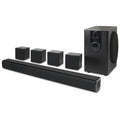
- Pair wireless speakers for audio without cable runs
- Run a day profile and a night profile in the picture settings
- Confirm input lag and refresh rate if you game
Conclusion
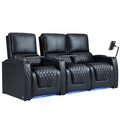
Bright rooms are unforgiving, and the wrong projector makes every movie night a compromise. JoeMo Promo makes it simple with a handpicked selection of projectors built for real living spaces, plus the seating and surround sound to complete the room. Every pick here supports a stunning 300-inch image projection, automatic focus and keystone correction for a perfect picture, and wireless speaker connectivity for a clutter-free setup, with free shipping on most orders within the Continental U.S. and a 30-day return policy.
Frequently Asked Questions
How many lumens do I need for a bright living room?
For a living room with windows and some ambient light, aim for at least 3,000 ANSI lumens. Rooms with direct sunlight or no curtains need 5,000 or more. The CAIWEI Halo 300 and Karnstar Outdoor Cinema Projector both exceed these thresholds, making them strong choices for daylight viewing.
Do projectors work in bright rooms?
Yes, but the image washes out without enough light output and the right screen. A projector rated for high lumens paired with an ambient light rejecting screen keeps contrast and color visible even with lamps on or windows uncovered. Standard white screens reflect ambient light and should be avoided in bright spaces.
What type of projector screen is best for ambient light rejection?
A gray ALR screen with a directional coating rejects overhead and side light while reflecting the projector's beam back to viewers. This preserves black levels and color saturation in rooms where you cannot fully control light. Pairing an ALR screen with a high-lumen projector delivers the best results in bright living rooms.
Do laser projectors work better in bright rooms than lamp projectors?
Laser light sources hold their brightness longer and often produce higher peak brightness than lamp-based models, which helps in daylight. However, the projector's rated lumens and the screen you pair it with matter more than the light source type alone. A high-lumen lamp projector with an ALR screen can outperform a low-lumen laser model.
Is a 4K projector necessary for a bright living room?
Native 1080p with 4K support is sufficient for most living room setups, especially at typical viewing distances. Brightness and contrast matter more than resolution in rooms with ambient light because washed-out blacks hurt perceived image quality more than softer detail. Prioritize lumens and an ALR screen before upgrading to native 4K.