Is a 4K Short Throw Projector Worth It for Gaming?
Table of Contents
- Verdict: Who Should Buy a 4K Short Throw Projector for Gaming
- Input Lag on Gaming Projectors: What the Numbers Actually Mean
- Ultra Short Throw Projector vs TV for Gaming: A Realistic Comparison
- Best Gaming Projector for Small Living Room Setups
- Brightness, HDR, and Ambient Light: Why Your Room Matters
- The Hidden Costs: ALR Screens, Maintenance, and Longevity
- Conclusion: Is It Worth It for Your Setup?
- Frequently Asked Questions
Last Updated: October 2, 2026
Verdict: Who Should Buy a 4K Short Throw Projector for Gaming
Short answer: yes, if you want a 100-inch-plus image in a room too small for a long-throw setup, and you accept that you'll pay more than a comparable TV. No, if you play competitive shooters where every millisecond counts, or if you watch in a bright room without the right screen.
The Case For: Immersion and Space Savings
A 4K short throw projector sits inches from the wall and throws a massive image. That's the whole appeal. You skip ceiling mounts, long cable runs, and the "sitting too close" problem that plagues deep-room setups.
The Case Against: Cost and Compromises
The catch is real. You'll likely pair a short throw projector with an ambient light rejecting screen, and that screen can cost as much as the projector itself. Add a soundbar or speakers, and the "cheaper than a TV" argument collapses.
| Factor | 4K Short Throw Projector | Large 4K TV |
|---|---|---|
| Image size | 100-150 inches | 65-85 inches typical |
| Best in bright rooms | Only with ALR screen | Yes, natively |
| Upfront cost | Projector + screen + audio | Single purchase |
| Portability | High | None |
| Black levels | Weaker | Stronger |
Input Lag on Gaming Projectors: What the Numbers Actually Mean
Input lag is the delay between your controller input and the on-screen result. For gaming, it matters more than resolution. A projector with 4K resolution but 50ms of lag will feel sluggish; a 1080p projector at 16ms will feel instant.
Why the Same Projector Gets Two Different Lag Numbers
A single "12ms" figure is almost meaningless without the refresh rate attached to it. Input lag is typically measured at 60Hz and again at 120Hz, and the two numbers can differ by a wide margin because the projector is processing twice as many frames per second at the higher rate. A projector that posts a respectable figure at 60Hz may fall apart at 120Hz, or vice versa.
How to Test Input Lag Yourself
You don't have to take a spec sheet's word for it. The most common DIY method is a laptop-to-projector mirror test: mirror your laptop display to the projector, open an online lag tester that flashes a moving timer, then photograph both screens in a single frame. The gap between the two timers is your real-world latency. Repeat it at 60Hz and 120Hz to see how the projector behaves under each.
What the Numbers Mean in Practice
For casual and single-player gaming, anything under roughly 40ms is fine. For competitive play, you want to be in the low-20s or better, and you want that number to hold at the refresh rate you actually play at. If you're chasing frames in a fast shooter, a projector that can't sustain low lag at 120Hz will feel worse than a cheaper 1080p unit that can.
Ultra Short Throw Projector vs TV for Gaming: A Realistic Comparison
An ultra short throw projector wins on scale and flexibility; a TV wins on brightness, black levels, and zero setup friction. Which matters more depends entirely on your room, but the comparison most articles run stops at the sticker price, and that's where it gets misleading.
The Real Cost Stack
A large 4K TV is a single purchase. You unbox it, mount it or set it on a stand, plug in your console, and you're done. The price on the box is the price you pay.
- Projector, the headline number you see advertised.
- ALR screen, an ambient light rejecting screen is effectively mandatory if the room has any windows, and a good Fresnel ALR screen can cost as much as the projector itself. This is the hidden cost almost no listing mentions.
- Audio, projector built-in speakers are almost universally weak, so budget for a soundbar or a pair of powered speakers.
- Cabling and mounting, a short HDMI run to the console, plus a stable surface or shelf positioned at the correct throw distance.
Why the ALR Screen Isn't Optional
A projector reflects light off a surface rather than emitting it like a TV panel. In a bright room, ambient light hits that surface and washes out the image. An ALR screen is engineered to reflect projected light back toward the viewer while absorbing light arriving from other angles, which is why it's the single biggest upgrade for daytime viewing.
The Room-First Decision Framework
Instead of asking "projector or TV," answer these three questions:
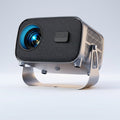
Nova 300 Smart Home Theater Projector →
- How much light hits the screen during your typical gaming session? If you game mostly at night or can control the light, the projector's size advantage becomes overwhelming. If you game during the day in a room with big windows, a TV will look dramatically better without any extra purchases.
- How far do you sit, and how wide is your seating? A UST projector throws a huge image from inches away, which solves the small-room problem. But the ALR screen's viewing cone means off-axis seats get a worse picture than the center seat.
- How much setup friction can you tolerate? TVs win on convenience, no focus, no keystone correction, no screen pairing. You plug in and play. Projectors need alignment, and even auto-focus and auto-keystone models benefit from a one-time setup.
Where Each One Actually Wins
A TV wins on brightness, black levels, and zero setup friction. It also wins on peak competitive performance, because the best gaming TVs post lower input lag than most projectors.
Best Gaming Projector for Small Living Room Setups
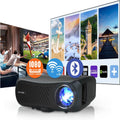
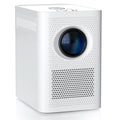
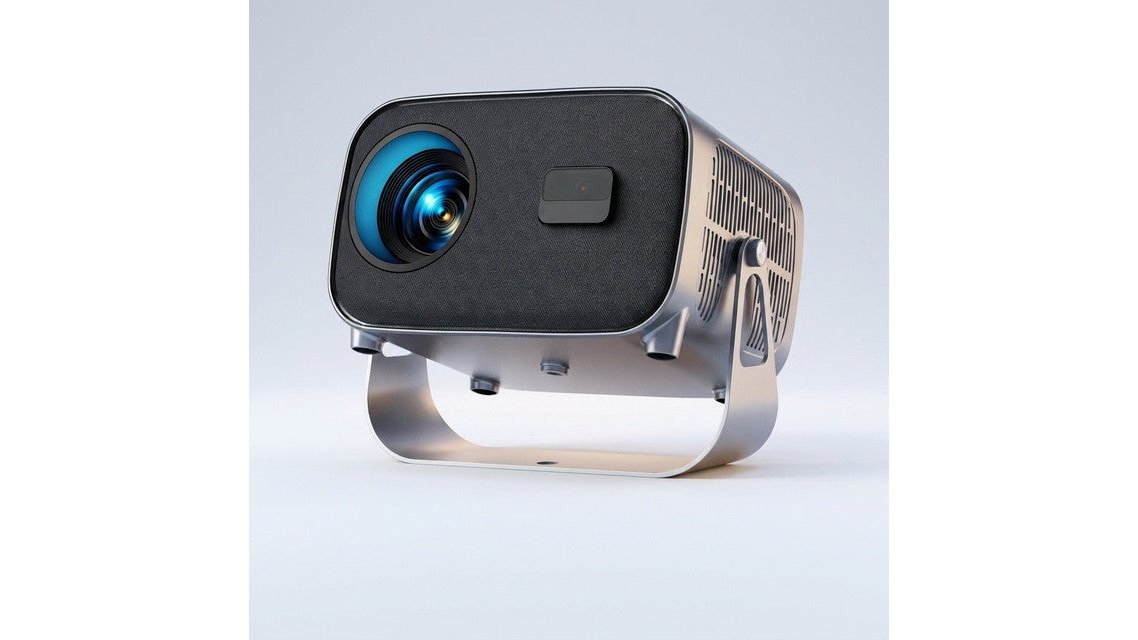
For a small living room, the best gaming projector is one with short throw distance, low input lag, and enough brightness to fight ambient light. JoeMo Promo's Nova 300 Smart Home Theater Projector hits that brief at $529.99, with native 1080p and 4K support, auto-focus, keystone correction, and a 360° stand that lets you aim at a wall or ceiling.

Brightness, HDR, and Ambient Light: Why Your Room Matters
Brightness, measured in lumens, decides whether your image survives a lit room. HDR expands the range between the darkest and brightest parts of a scene, but a projector can only show HDR properly if it has brightness headroom to spare.
The Hidden Costs: ALR Screens, Maintenance, and Longevity
The hidden cost nobody mentions upfront is the screen. An ambient light rejecting (ALR) screen can cost as much as your projector, and without one, a bright room will wash out your image.
Conclusion: Is It Worth It for Your Setup?
A 4K short throw projector is worth it for gaming if you want a cinema-scale image in a small room, game mostly in controlled light, and don't mind pairing it with an ALR screen and external speakers. It's not worth it if you need peak competitive performance or watch in a bright room without the right setup.
Frequently Asked Questions
Do short throw projectors have high input lag for gaming?
It depends on the model. Many modern 4K short throw projectors include a dedicated gaming mode that reduces input lag to around 20-30 milliseconds, which is comparable to a standard TV. However, cheaper or older models can have lag over 50ms, which is noticeable in fast-paced games. Always check the manufacturer's specs for the tested input lag in gaming mode. Features like HDMI 2.1 and variable refresh rate (VRR) also help reduce lag and screen tearing.
Is 4K resolution necessary for gaming on a 120-inch screen?
At 120 inches, 4K resolution makes a visible difference. A 1080p image stretched to that size will look softer, and you may notice individual pixels. A 4K short throw projector delivers four times the detail, so text, textures, and fine in-game objects look sharper. That said, if you sit more than 10-12 feet away, the difference between 1080p and 4K becomes less obvious. For the most immersive experience with a large screen, 4K is worth the investment.
What is the difference between a standard and ultra short throw projector for gaming?
A standard short throw projector needs about 3-5 feet of distance from the wall to create a large image, so you need a coffee table or ceiling mount. An ultra short throw (UST) projector sits just inches from the wall, often on a media console. For gaming, UST projectors eliminate the risk of someone walking in front of the beam and casting a shadow. They also save space in small rooms. However, UST models typically cost more and require a perfectly flat, specialized screen for the best image.
Can you use a 4K short throw projector in a bright room?
Yes, but brightness matters. Look for a projector with at least 2,000-3,000 ANSI lumens for a room with some ambient light. For a very bright room with windows, you'll need 3,000 lumens or more, plus an ambient light rejection (ALR) screen. ALR screens are specially designed to reflect the projector's light back to the viewer while absorbing light from other sources, which improves contrast ratio and black levels. Without one, the image will look washed out during the day.
What should I look for in a gaming projector besides 4K resolution?
Focus on input lag, refresh rate, and connectivity. Aim for a projector with a gaming mode that delivers under 30ms of input lag and a refresh rate of at least 60Hz, or 120Hz for smoother motion. Look for HDMI 2.1 ports to support 4K at 120Hz, and variable refresh rate (VRR) to reduce tearing. Brightness (measured in lumens) and contrast ratio are also critical for a punchy image. Finally, consider the throw ratio to ensure it fits your room layout.
Turning a small room into a big-screen gaming setup shouldn't require a contractor or a second mortgage. JoeMo Promo makes it simple with projectors built for effortless setup, automatic focus and keystone correction for a perfect picture every time, and a rotating stand that adapts to any wall or ceiling. Shop the collection and see your games at 300 inches.